With our competitors and customers alike, Lam recognizes the need to aspire to a net zero future.
We strive to iterate and perfect the most intricate details of our technology and processes in a way that uses fewer resources and releases fewer greenhouse gas (GHG) emissions.
Like other companies and industries, Lam may face operational, regulatory, and reputational risks associated with our environmental impact. We strive to manage these risks and look for ways to reduce our impact so we can continue to be an engine of progress.
Our path to net zero
Establish the vision. Do the work. That’s how we’re bringing our net zero ambition into sight. Our approach to progress includes:
Goals
Net zero is a climate action goal to balance the amount of GHGs being released into the atmosphere with the amount of GHGs being removed. Lam has joined organizations worldwide that are setting net zero goals so that, collectively, we seek to limit global warming to 1.5 degrees Celsius.

Announced Science Based Target initiative (SBTi) intention and net zero pathway
Achieved SBTi approval for three near-term emissions-reduction targets1

Reduce absolute Scope 1 and 2 (market-based) GHG emissions by 25% from a 2019 baseline
Achieve 12 million kWh in total energy savings from a 2019 baseline
46.5% of suppliers measured by emissions have science-based targets (SBTs)2

Reduce absolute Scope 1 and 2 (market-based) GHG emissions by 46.2% from a 2019 baseline1
Achieve 100% renewable electricity1
Achieve an additional 8 million kWh in total energy savings from a 2025 baseline
95% of top direct suppliers measured by spend have SBTs2
Reduce Scope 3 emissions from use of sold products 63.8% per USD value added from a 2022 baseline
Reduce direct supplier2 emissions by 64% per USD value added from a 2024 baseline
Achieve net zero operations
(Scope 1 and 2)
Achieve net
zero emissions
Our goals aim to cover various GHG emissions sources across our business.

| UPSTREAM ACTIVITIES | Lam facilities and operations | DOWNSTREAM ACTIVITIES | |||||
|---|---|---|---|---|---|---|---|
| UPSTREAM ACTIVITIES |
Scope 3 indirectKey contributors:
Collaborating for progress:
|
Lam facilities and operations |
Scope 2 market-based indirectKey contributor:
Collaborating for progress:
|
Scope 1 directKey contributors:
Collaborating for progress:
|
DOWNSTREAM ACTIVITIES |
Scope 3 indirectKey contributors:
Collaborating for progress:
|
|
Building the foundation
While our net zero goals are forward thinking, progress starts now. With our long-term roadmap in place, we’re building the foundation needed to achieve our goals. That means ramping up our resources, building teams and detailed plans, and focusing on three key areas of our business. Here’s a look at the actions we’re taking across our organization and supply chain.
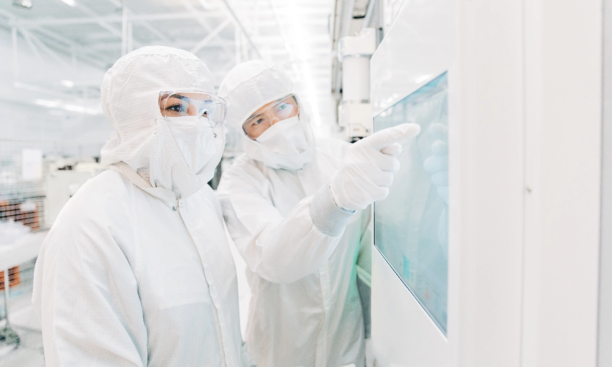
Facilities
As we work to decarbonize our operations, we’re focused on enhancing energy efficiency, reducing water usage, and minimizing waste. We’re also investing in renewable electricity solutions, with solar arrays installed at several sites.
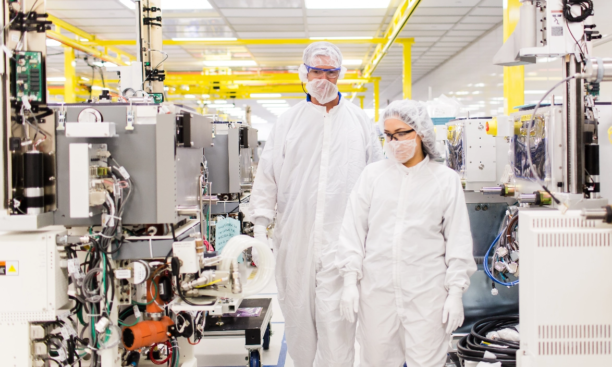
Suppliers
We strive to collaborate with suppliers to reduce our supply chain-based emissions through ongoing engagement and data collection. We offer trainings, one-on-one support, and energy audits for select suppliers to support their goal-setting and decarbonization efforts.

Customers and products
We are establishing baseline data for our products’ energy consumption and GHG emissions and engaging with customers to align on sustainability metrics and targets. This work informs our investments in R&D as we develop solutions that support our company and customers’ emissions-reduction goals.
Net zero starts with clear ownership
Achieving net zero emissions is a critically important initiative. It requires strong governance to deliver effective outcomes. With this in mind, oversight goes all the way up to our Board of Directors. We also have a Net Zero Leadership team and various working groups to support and monitor our ongoing progress.
To inspire broader action, we seek to engage closely with Lam’s customers and suppliers and are active in industry organizations. We strive to lead by example, including by becoming the first U.S.-based semiconductor equipment manufacturer to receive SBTi approval for its near-term GHG emissions-reduction goals. Lam is also a founding member of the Semiconductor Climate Consortium, the first global, ecosystem-wide collaborative of semiconductor companies dedicated to reducing GHG emissions. Through collaboration, transparency, and ambitious goal setting (in accordance with the best available science), the consortium aims to advance the semiconductor industry’s response to climate change—one of the most pressing challenges of our time.
Addressing the risks of climate change to unlock new opportunities
We strive to take a proactive approach to risk management, and our approach to climate change is no different. By identifying the risks that climate change poses, we can take meaningful steps to make our company more resilient. We worked with a third party to complete an in-depth climate change risk analysis. Through the assessment, we also identified opportunities to unlock benefits for our stakeholders and business. The results of the analysis include:
 Risks
Risks
- Changing customer expectations
- Competitors developing lower-impact products
- Operational disruptions from tropical windstorms, extreme heat, water stress, drought, flooding, and/or natural hazards
- Natural hazards leading to supply chain disruptions and/or preventing access to the operational workplace
- Regulation of Lam’s direct operations, customer operations, and/or raw materials (e.g., carbon pricing)
- Reputational impacts from poor performance on external climate-related engagements
- Water stress impacting major customer operations
 Opportunities
- Expansion of end-use markets
- Improving resilience of business operations through asset hardening
- Lowering utility costs through energy reduction and decarbonization efforts
- Investor prioritization of lower-carbon companies
As we learn more about the likelihood and potential effects of these risks, we seek to continue to share our management and mitigation efforts with stakeholders. To ensure best practices in making and reporting progress, we strive to align our efforts with leading ESG disclosure frameworks including the Sustainability Accounting Standards Board (SASB), the Global Reporting Index (GRI), and the Task Force on Climate-related Financial Disclosures (TCFD). Several of our practices align with the TCFD categories listed below:
| TCFD Category | Aligned Practices at LAM |
|---|---|
| TCFD Category: Metrics and targets | Aligned Practices at LAM: 2030 GHG reduction goals aligned with SBTi methodology
Scope 3 emissions inventory and emissions-reduction goals to understand impacts in the value chain 2050 goal to achieve net zero across all emissions scopes, with interim goals for 2030 and 2040 |
| TCFD Category: Risk management | Aligned Practices at LAM: Multiple leading enterprise risk management practices
Strong governance to manage and escalate risk to appropriate levels |
| TCFD Category: Strategy | Aligned Practices at LAM: Leadership involvement and oversight on ESG strategy |
| TCFD Category: Governance | Aligned Practices at LAM: Board-level ESG oversight
Regular ESG reports to the Board and the Nominating and Governance Committee Net zero leadership team and cross-functional working groups Annual net zero objectives integrated into corporate accountability systems and review |
| TCFD Category: Reporting | Aligned Practices at LAM: Consistent climate-related metrics reported to CDP and in our annual Global Impact Report |
Each year Lam reports environmental performance to CDP. In 2025, we received an A- for Climate Change and a B for Water Security.


Investor Relations
Lam Research Corporation is a global supplier of innovative wafer fabrication equipment and services to the semiconductor industry.

Cautionary Statement
Statements made on our website that are not of historical fact are forward-looking statements and are subject to the safe harbor provisions created by the Private Securities Litigation Reform Act of 1995. Such forward-looking statements include, but are not limited to, statements that relate to: industry and market growth and demand expectations; demand for our products; our plans and expectations for growth; technology and product innovation; sustainability and ESG strategy and goals; ESG integration into our business; net zero, emissions reduction, and climate action goals; climate risks and opportunities; energy efficiency, renewable energy, and resource conservation initiatives, targets and goals; product lifecycle impacts and customer environmental performance; virtual technologies and environmental impact reduction; PFAS and other product regulatory and compliance risks; research and development investments; product safety and quality; operational efficiency and resilience; water stewardship, waste management, chemicals management, and biodiversity actions; workforce, safety, talent development, and employee experience; supply chain sustainability, due diligence, and supplier climate engagement; supplier and logistics optimization; community impact and charitable initiatives; ethics, compliance, corporate governance, and data integrity; information security, data privacy, and intellectual property protection; human rights and responsible labor practices; and legal, regulatory, and tax compliance. Such statements are based on current expectations and are subject to risks, uncertainties, and changes in condition, significance, value, and effect. Some factors that may affect these forward-looking statements include: business, economic, political and/or regulatory conditions in the consumer electronics industry, the semiconductor industry and the overall economy may deteriorate or change; the actions of our customers and competitors may be inconsistent with our expectations; trade regulations, export controls, tariffs, trade disputes, and other geopolitical tensions may inhibit our ability to sell our products; supply chain cost increases, tariffs, export controls and other inflationary pressures have impacted and may continue to impact our profitability; supply chain disruptions, export controls or manufacturing capacity constraints may limit our ability to manufacture and sell our products; and natural and human-caused disasters, disease outbreaks, war, terrorism, political or governmental unrest or instability, or other events beyond our control may impact our operations and revenue in affected areas; as well as the other risks and uncertainties that are described in the documents filed or furnished by us with the Securities and Exchange Commission, including specifically the Risk Factors described in our most recent annual report on Form 10-K or subsequent quarterly report on Form 10-Q. Such risks, uncertainties, and changes in condition, significance, value, and effect could cause our actual results to differ materially from those expressed on our website and in ways that are not readily foreseeable. Readers are cautioned not to place undue reliance on these forward-looking statements, which speak only as of June 16, 2026 and are based on information reasonably known to us as of that date. We do not undertake any obligation to update any forward-looking statements, or to release the results of any revisions to these forward-looking statements, to reflect the impact of anticipated or unanticipated events or circumstances that occur after such date.
Additionally, while we leverage various frameworks and other standards in our disclosures, such standards are ultimately only used to inform our disclosures, and we cannot guarantee (and no language of “alignment” or similar should be understood to mean) complete adherence to such standards or any particular stakeholders’ interpretation of same. Our disclosures based on standards may change due to revisions in framework requirements, availability or quality of information, changes in our business or applicable governmental policies, or other factors, which may be within or outside of our control. Similarly, some of the information in this webpage is reliant on third-party information or methodologies. Any inaccuracies or changes in such information or methodologies, whether within or outside of our control, could cause results and performance to differ from what is reported. In addition, various aspects of this report are based on processes and procedures that we believe apply appropriate levels of support to address issues in scope and, while these statements may use words such as “ensure”, “prevent”, or similar language, such terms should not be considered to mean (as there can be no guarantee) that such efforts will be successful in all situations.
Separately, certain information included on this webpage may be used for compliance with various legal obligations; however, this webpage is necessarily broader than certain legal requirements, and any such use shall not be deemed to incorporate portions of this webpage that are not responsive to such obligations or references to same. It is not intended, and we hereby disclaim, any legal relations, rights or obligations to any third party in connection with these disclosures. Moreover, by providing this information, neither we nor any of our affiliates are conceding any specific item is required or applicable under any legal obligation, nor are we conceding any particular interpretation of such legal requirements. Moreover, in certain circumstances, information included in this webpage may differ from information included in regulatory reporting due to differences in methodologies for the calculation of certain metrics or other factors, which may be within or outside of our control.
- Short-term GHG emissions-reduction targets approved by the SBTi. We have revised our 2030 Scope 1 and 2 emissions-reduction target, due to ongoing due diligence revealing a need to adjust our 2019 baseline. The revised goal remains in line with SBTi expectations.
- Top direct suppliers are defined as the top 100 direct suppliers by spend, which account for approximately 88% of direct spend and 92% of direct supplier emissions, with some variability year-over-year. Direct suppliers are defined as those who provide parts, assemblies, and services to produce parts used to manufacture and support Lam’s products. Indirect suppliers are all other goods and services used by Lam’s daily operations that are not parts, assemblies, or services directly tied to producing parts used to manufacture or support Lam’s products.