Our initiatives are intended to encompass many aspects of our business—from the way we manage our workforce and supply chain to how we develop new products.
We believe operating with sustainability in mind helps us better serve our customers; strengthens our organization; supports our efforts in effectively managing and mitigating risks; deepens our values-based culture; and prioritizes collaboration, innovation, and efficiency.
Our approach centers on stakeholder engagement, goal setting, and accountability for our performance. We aim to meet or exceed expectations and requirements around transparency and disclosure, as well as industry-recognized frameworks, best practices, and standards.
Our mission
Advancing positive impact for our business and world.
ESG goals
Our ESG goals are aimed at keeping us focused and accountable for building momentum across our ESG pillars. After achieving the majority of our 2025 goals, we refreshed our goal program through a cross-functional review, assessing which goals to reset, retire, or reframe, as well as where to set our sights next. Our 2030+ goals are grounded in action plans and industry best practices, and are approved through our ESG governance structure.1
- In Progress
- Achieved
| 2030+ Goal | Status | Measurement |
|---|---|---|
| Goal Reduce Scope 3 emissions from use of sold products by 63.8% per USD value added by 2034 from a 2022 baseline. |
Status | Measurement Cumulative from baseline |
| Goal 75% of in-scope2 direct supplier facilities have a valid audit3 by 2030 evaluated annually. |
Status
Refreshed in 2025 |
Measurement Annual |
| Goal Reduce direct supplier4 emissions by 64% per USD value added by 2034 from a 2024 baseline. |
Status
New in 2025 |
Measurement Cumulative from baseline |
| Goal 95% of top direct suppliers4 measured by spend have science-based targets by 2030. |
Status | Measurement Cumulative |
| 2030+ Goal | Status | Measurement |
|---|---|---|
| Goal Achieve annual employee engagement at or above the global benchmark for both the overall annual employee survey and the Belong and Connect Index. |
Status
Refreshed in 2025 |
Measurement Annual |
| Goal Achieve above-benchmark5 standards for hours of learning per employee per year. |
Status
New in 2025 |
Measurement Annual |
| Goal Maintain a global recordable injury rate below 0.4 injuries per 100 workers annually.6 |
Status | Measurement Annual |
| Goal Develop future semiconductor talent by up-skilling at least 70,000 students by 2031 globally. |
Status
New in 2025 |
Measurement Cumulative |
| Goal Directly benefit 750,000 people globally through Lam social impact programs by 2030. |
Status
New in 2025 |
Measurement Cumulative from baseline |
| 2030+ Goal | Status | Measurement |
|---|---|---|
| Achieve net zero emissions by 2050, including meeting the following interim targets:7 | ||
| Goal Achieve 8 million kWh in total energy savings by 2030 from a 2025 baseline.
|
Status
Refreshed in 2025 |
Measurement Cumulative from baseline |
| Goal Achieve 100% renewable electricity by 2030.
|
Status | Measurement Cumulative |
| Goal Reduce absolute Scope 1 and 2 (market-based) greenhouse gas (GHG) emissions by 46.2% by 2030 from a 2019 baseline. By 2040, achieve net zero operations.
|
Status | Measurement Cumulative from baseline |
| Goal Apply the U.S. Environmental Protection Agency waste management hierarchy to all facilities by conducting thorough assessments of our top 80% of waste categories by mass to drive circular economy principles by 2030 from a 2025 baseline. |
Status
New in 2025 |
Measurement Cumulative from baseline |
| Goal Achieve 80 million gallons of water savings by 2035 from a 2025 baseline. |
Status
Refreshed in 2025 |
Measurement Cumulative from baseline |
We aspire to manage our impact across what we do



Strategic pillars and material ESG topics
Lam’s ESG strategy is called Impact plus. This phrase is a reminder that as we step into the future, it’s not just where we’re going but how we get there that matters. This strategy has three pillars:
 Product+
 People+
 Planet+
Impact plus is anchored in a foundation of responsible business and governance practices. Key focus areas within each pillar map to our material ESG topics,8 which we identified by engaging key internal and external stakeholders in an in-depth ESG materiality assessment.

Community
- •Collaborating and volunteering
- •Investing in philanthropic causes
- •Participating in conferences and forums

Customers
- •Connecting through our Global Customer Operations & Customer Support Business Group
- •Participating in industry conferences
- •Conducting regular business review meetings

Employees
- •Sponsoring and supporting our employee resource groups
- •Conducting meetings and surveys
- •Discussing/fostering performance and development

Industry organizations
- •Collaborating as an active member
- •Sponsoring and participating in conferences

Policymakers
- •Direct engagement through our Global Government Affairs group
- •Trade organization participation such as the National Association of Manufacturers, SEMI, and the Semiconductor Industry Association

Stockholders
- •Annual meeting of stockholders
- •Participation in conferences and forums
- •Quarterly earnings conference calls
- •Regular calls and in-person meetings

Suppliers
- •Annual supplier surveys
- •Annual Supplier Day (with Excellence Awards)
- •Monthly supplier scorecard reviews
- •Regular Supplier Town Halls
- •Strategic business reviews as needed
Among our most impactful tools for stakeholder engagement are our in-depth ESG materiality assessments, which we typically conduct every three to five years or more frequently if there’s a notable shift in our industry or business. During this process, we gather insights from internal and external stakeholders to guide and affirm Lam’s ESG approach. We conducted our latest assessment in 2022 using a double materiality methodology, in line with guidance from the Sustainable Accounting Standards Board (SASB) and the Global Reporting Initiative (GRI).
Through surveys and interactive interviews, participants assessed topics based on their importance to stakeholders and potential impacts both to and from Lam. We also integrated results from an employee survey to further incorporate our employees’ perspectives. The results were reviewed by both executive management and the Board.
Based on the results, we identified the following topics as being among the most impactful and strategically important to Lam’s ESG program: climate strategy and emissions management, supplier engagement and assessment, employee fulfillment and retention, product stewardship, supplier environmental performance, and leadership accountability.
| Material ESG topic | Business importance | Impacts | Strategies to address |
|---|---|---|---|
| Material ESG topic Climate strategy and emissions management Product stewardship |
Business importanceThis topic is relevant throughout our value chain. We face potential operational impacts as climate change continues to worsen, and potential regulatory and/or reputational impacts related to our emissions occur. We also expect customers may have an increasing need for emissions-reduction solutions that will enable them to meet their own climate targets. | ImpactsOur solutions enable technological advances that are contributing to a low-carbon economy. Our operations, supply chain, and products we make result in GHG emissions for Lam and our customers. We also face potential climate-related physical and transition risks that could have impacts on our business. | Strategies to addressShort- and long-term climate goals
Investment in energy efficiency and renewable electricity
Engagement with customers and suppliers to address Scope 3 emissions |
| Material ESG topicSupplier performance, engagement, and assessment | Business importanceTo achieve our climate goals and address potential human rights risks in our supply chain, we must regularly engage and assess our suppliers. | ImpactsLam can work to influence our suppliers to increase corporate responsibility practices that improve their own operations, reduce the risk associated with our supply chain, and support our goals. | Strategies to addressScience Based Targets initiative (SBTi) supplier engagement goal
Regular supplier assessments utilizing Responsible Business Alliance tools
Webinars, forums, and other activities to inform and educate suppliers |
| Material ESG topicEmployee fulfillment and retention | Business importanceAttracting and retaining employees is of utmost importance for Lam to achieve our short- and long-term business goals in a highly competitive employment market. | ImpactsLam can positively impact the community via job creation. We also face potential risk in not recruiting and retaining talent in a highly competitive employment market. | Strategies to addressAnnual employee engagement surveys Competitive compensation and benefits Employee training and development programs |
| Material ESG topicLeadership accountability | Business importanceTo promote business and ensure alignment in our efforts, effective leadership, oversight, and accountability are key. | ImpactsEngaging Lam leadership allows us to integrate material ESG topics into business decision-making and ensure we are prioritizing these topics across the business and meeting our goals. | Strategies to addressThe Board of Directors has oversight of ESG Board committees have oversight of specific ESG topics Lam’s ESG Executive Steering Committee guides strategy and drives accountability Our executive compensation program is tied to certain aspects of Lam’s ESG goals |
Contributing to the United Nations Sustainable
Development Goals (UN SDGs)
Through our ESG strategy, Lam is working to accelerate progress toward each of these goals. Lam is also a member of the UN Global Compact (UNGC), and we support the UNGC’s Ten Principles for labor, environment, anti-corruption, and human rights.
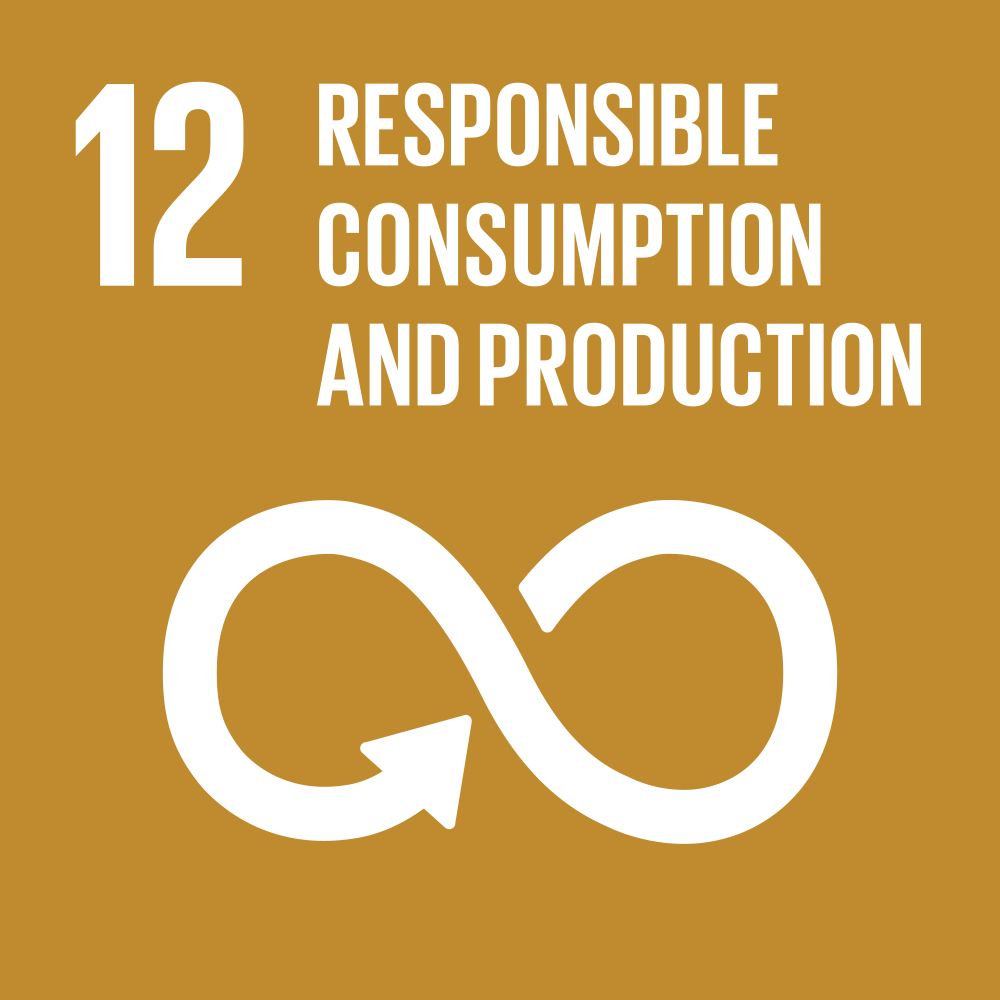
We also support the UNGC’s strategy to drive action in support of the UN SDGs. We use the SDGs as a framework to guide our initiatives and measure their effectiveness. We have identified the following SDGs as being most relevant to Lam’s material ESG topics:




Cautionary Statement
Statements made on our website that are not of historical fact are forward-looking statements and are subject to the safe harbor provisions created by the Private Securities Litigation Reform Act of 1995. Such forward-looking statements include, but are not limited to, statements that relate to: industry and market growth and demand expectations; demand for our products; our plans and expectations for growth; technology and product innovation; sustainability and ESG strategy and goals; ESG integration into our business; net zero, emissions reduction, and climate action goals; climate risks and opportunities; energy efficiency, renewable energy, and resource conservation initiatives, targets and goals; product lifecycle impacts and customer environmental performance; virtual technologies and environmental impact reduction; PFAS and other product regulatory and compliance risks; research and development investments; product safety and quality; operational efficiency and resilience; water stewardship, waste management, chemicals management, and biodiversity actions; workforce, safety, talent development, and employee experience; supply chain sustainability, due diligence, and supplier climate engagement; supplier and logistics optimization; community impact and charitable initiatives; ethics, compliance, corporate governance, and data integrity; information security, data privacy, and intellectual property protection; human rights and responsible labor practices; and legal, regulatory, and tax compliance. Such statements are based on current expectations and are subject to risks, uncertainties, and changes in condition, significance, value, and effect. Some factors that may affect these forward-looking statements include: business, economic, political and/or regulatory conditions in the consumer electronics industry, the semiconductor industry and the overall economy may deteriorate or change; the actions of our customers and competitors may be inconsistent with our expectations; trade regulations, export controls, tariffs, trade disputes, and other geopolitical tensions may inhibit our ability to sell our products; supply chain cost increases, tariffs, export controls and other inflationary pressures have impacted and may continue to impact our profitability; supply chain disruptions, export controls or manufacturing capacity constraints may limit our ability to manufacture and sell our products; and natural and human-caused disasters, disease outbreaks, war, terrorism, political or governmental unrest or instability, or other events beyond our control may impact our operations and revenue in affected areas; as well as the other risks and uncertainties that are described in the documents filed or furnished by us with the Securities and Exchange Commission, including specifically the Risk Factors described in our most recent annual report on Form 10-K or subsequent quarterly report on Form 10-Q. Such risks, uncertainties, and changes in condition, significance, value, and effect could cause our actual results to differ materially from those expressed on our website and in ways that are not readily foreseeable. Readers are cautioned not to place undue reliance on these forward-looking statements, which speak only as of June 16, 2026 and are based on information reasonably known to us as of that date. We do not undertake any obligation to update any forward-looking statements, or to release the results of any revisions to these forward-looking statements, to reflect the impact of anticipated or unanticipated events or circumstances that occur after such date.
Additionally, while we leverage various frameworks and other standards in our disclosures, such standards are ultimately only used to inform our disclosures, and we cannot guarantee (and no language of “alignment” or similar should be understood to mean) complete adherence to such standards or any particular stakeholders’ interpretation of same. Our disclosures based on standards may change due to revisions in framework requirements, availability or quality of information, changes in our business or applicable governmental policies, or other factors, which may be within or outside of our control. Similarly, some of the information in this webpage is reliant on third-party information or methodologies. Any inaccuracies or changes in such information or methodologies, whether within or outside of our control, could cause results and performance to differ from what is reported. In addition, various aspects of this report are based on processes and procedures that we believe apply appropriate levels of support to address issues in scope and, while these statements may use words such as “ensure”, “prevent”, or similar language, such terms should not be considered to mean (as there can be no guarantee) that such efforts will be successful in all situations.
Separately, certain information included on this webpage may be used for compliance with various legal obligations; however, this webpage is necessarily broader than certain legal requirements, and any such use shall not be deemed to incorporate portions of this webpage that are not responsive to such obligations or references to same. It is not intended, and we hereby disclaim, any legal relations, rights or obligations to any third party in connection with these disclosures. Moreover, by providing this information, neither we nor any of our affiliates are conceding any specific item is required or applicable under any legal obligation, nor are we conceding any particular interpretation of such legal requirements. Moreover, in certain circumstances, information included in this webpage may differ from information included in regulatory reporting due to differences in methodologies for the calculation of certain metrics or other factors, which may be within or outside of our control.
- For more information on our methodology, please see the About this Report page of our 2025 Global Impact report.
- In 2026, “in-scope” supplier facilities are those supplying Lam and operated by the top 100 direct suppliers by spend in nine high-risk geographies and have a high-risk score on a Responsible Business Alliance (RBA) Self-Assessment Questionnaire.
- Audits refer to those completed through the RBA Validated Assessment Program (VAP).
- Top direct suppliers are defined as the top 100 direct suppliers by spend, which account for approximately 88% of direct spend and 92% of direct supplier emissions, with some variability year-over-year. Direct suppliers are defined as those who provide parts, assemblies, and services to produce parts used to manufacture and support Lam’s products. Indirect suppliers are all other goods and services used by Lam’s daily operations that are not parts, assemblies, or services directly tied to producing parts used to manufacture or support Lam’s products.
- The annual benchmark is established by the Association of Talent Development.
- Recordable injuries require treatment by a physician, work restriction, or lost time.
- The energy savings goal and Scope 1 and 2 emissions goal that concluded in 2025 also contribute to our net zero ambition.
- The identification of a topic or other matter as “material” does not, and should not be interpreted to mean that it is material for any other purpose, including for the purpose of our financial statements or the documents we file with the U.S. Securities and Exchange Commission, or other regulatory requirements. Particularly in the ESG context, materiality is subject to various definitions which differ from, and are often more expansive than, the definition under these securities or other laws. Similarly, attention to environmental, social, and other sustainability issues from various stakeholders and frameworks means our approach to the identification and discussion of various risks and impacts may not be limited to items that have been deemed material or otherwise relevant for disclosure under any particular regulatory regime. Materiality can also be difficult to ascertain in advance, particularly due to the uncertainties, assumptions, and long timelines associated with several such topics.